22/12/2020 05:10
HUMAN ADAPTATION TO COASTAL EVOLUTION: LATE QUATERNARY EVIDENCE FROM SOUTHEAST ASIA (SUNDASIA) - A REPORT ON THE SECOND YEAR OF THE PROJECT
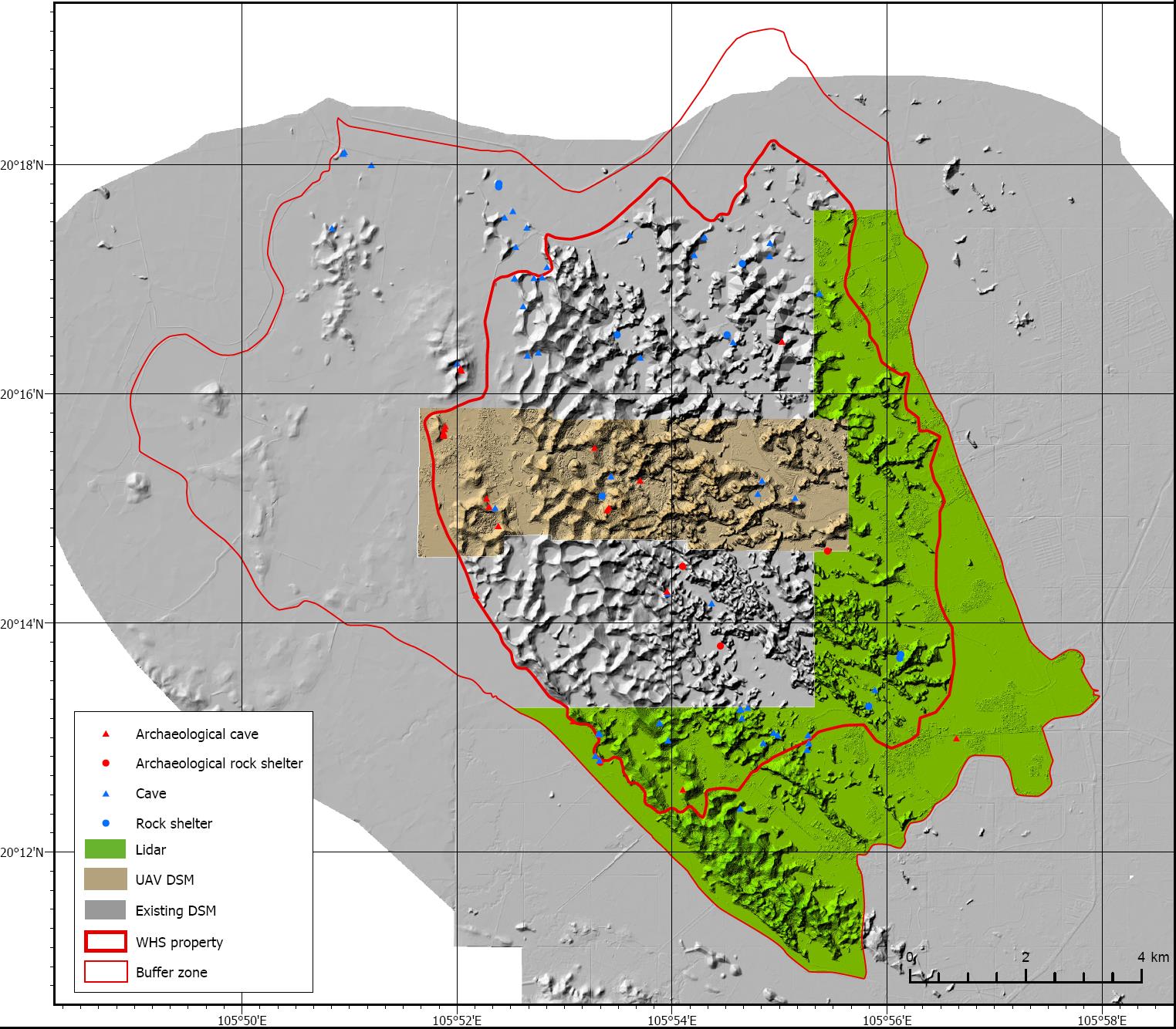
In the time since the first year report, primary field data collection has been completed across all proxies. Cave excavations at Thung Binh 1 and Hang Moi have increased the sample size of cultural evidence attributable to the late Pleistocene and Holocene. Zooarchaeological and artefactual analysis of material from these periods has begun and is already yielding significant results that have been presented in conference and are the subject of forthcoming publications. Human skeletal remains have been recovered at two of the archaeological sites studied by the project. Assessment of current vertebrate faunal biodiversity in Trang An has also been undertaken to better understand the changes through time, including human impact on the ecological communities of this habitat.
Landscape survey of a further 12 caves has contributed data to the spatial distribution of sites with archaeological (and natural) heritage potential, while the mapping of new marine notches has increased the number of data points for coastline reconstruction from that previously available. A high resolution DEM has been completed in a c. 1500 ha corridor across the core zone of the property that also contains the highest concentration of the project’s archaeological and palaeoenvironmental site locales. The approach taken using an off-the-shelf SUAV and the challenges overcome to map a tower karst environment have had the additional outcome of demonstrating both the utility and cost-efficiency of this method in heritage monitoring and management with presentations being made accordingly in colloquia. Online publication of collected GIS data has also begun.
(In Vietnam Archaeology 14/2019)